
 By Charles Pemu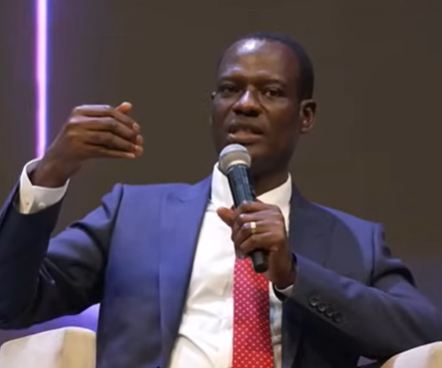
ABUJA—The Chairman of the Presidential Committee on Fiscal Policy and Tax Reforms, Taiwo Oyedele, has announced that an estimated ninety-eight per cent of Nigerian workers will be exempted from paying personal income tax when the nation’s new tax regime is officially implemented in January 2026.
Speaking at a recent public function, Oyedele explained that the core objective of the reforms is to significantly ease the tax burden on low-income earners while simultaneously promoting equity and simplicity within the fiscal system.
The reform, codified under the Nigeria Tax Act 2025, introduces a much clearer and higher exemption limit for individual earnings. According to Oyedele, any individual earning the current national minimum wage of ₦70,000 monthly (₦840,000 annually) will be entirely exempted from paying income tax. This exemption threshold extends to individuals on slightly higher pay, including those earning up to ₦80,000 or ₦90,000 monthly.
The new tax law explicitly stipulates that the first ₦800,000 of an individual’s annual income is fully tax-free, offering significant relief to millions of low-income earners.
Conversely, the Committee Chairman noted that the new regime will primarily affect high-income earners. Oyedele stressed that only individuals earning above ₦2 million per month would experience an upward review in their personal income tax rates.
Under the progressive tax brackets introduced by the new Act, the highest marginal tax rate is set at twenty-five per cent, applicable only to annual incomes exceeding ₦50 million. This structural change aims to shift the tax burden away from the vulnerable majority and towards those with substantial income capacity, fulfilling the administration’s goal of making the tax system fairer.