
 By Charles Pemu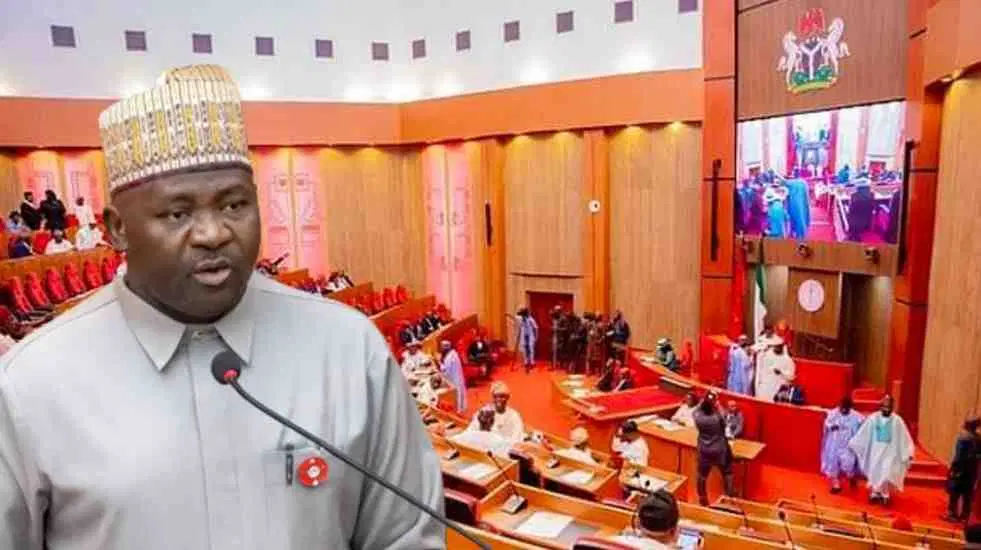
ABUJA—Minister of Defence nominee, General Christopher Gwabin Musa (rtd), yesterday used his Senate screening to maintain a firm stance against negotiating with or paying ransom to terrorists, while strongly advocating for the establishment of a unified national database to win the country’s fight against insecurity.
General Musa’s screening coincided with a move in the Senate to significantly tighten anti-kidnapping laws by proposing the death penalty for kidnappers, their financiers, and informants, as lawmakers debated amendments to the 2022 Terrorism (Prevention and Prohibition) Act.
Speaking before the Senate, General Musa laid out several strategic recommendations necessary for effective counter-insurgency:
No Negotiation with Terrorists
General Musa maintained that the government must enforce a total ban on ransom payments and negotiations with criminals.
“There is no negotiation with any criminal. When people pay ransoms, it buys terrorists time to regroup, re-arm and plan new attacks. Communities that negotiated still got attacked later,” he warned.
He insisted that the nation’s banking system has the capability to digitally monitor and trace financial flows connected to crime if fully activated.
Musa argued that Nigeria’s fight against insecurity would remain ineffective until the country established a unified national database that captures every citizen and links all security, banking, and identity systems together. He described the nation’s fragmented data architecture with multiple data silos operated separately by immigration, quarantine, and other agencies, as the single biggest obstacle to tracking criminals, dismantling networks, and preventing repeat offenders.
The retired General stressed that military operations represent only 25–30 per cent of the counter-insurgency effort. He identified poverty, illiteracy, poor governance, and weak local government structures as the true fuel for criminal activities. He urged state and local government administrators to take more responsibility for community-level intelligence and early intervention.
Musa criticized the slow justice system, where terrorism cases “drag for years,” which he said weakens the morale of security forces who risk their lives to make arrests. He recommended urgent legal reforms, including special terrorism courts, stronger penalties, and accelerated hearings.
He also revealed plans to withdraw soldiers from routine checkpoints nationwide to free forces for targeted operations inside forests and ungoverned spaces. He emphasized restoring safe access to farmlands, describing food security as a critical pillar: “Protecting farmers means protecting the nation.”
While Musa was being screened, the Senate moved to amend the 2022 Terrorism (Prevention and Prohibition) Act. The proposal, sponsored by Senate Leader Opeyemi Bamidele, seeks to:
- Classify kidnapping, hostage-taking, and related offences as acts of terrorism.
- Prescribe the death penalty for kidnappers and anyone financing, enabling, or providing information to them, without the option of a fine or alternative sentence.
Senator Bamidele argued that the patterns of brutality associated with kidnapping “now carry all the characteristics of terrorism,” making it necessary to treat the offense under the counter-terrorism framework. Senators Orji Uzor Kalu and Adams Oshiomhole backed the proposal, with Oshiomhole specifically criticizing current deradicalization programmes as ineffective. The bill was unanimously approved and referred to the relevant committees for further legislative action.
Separately, the House of Representatives adopted a sweeping set of national security reform resolutions, including a call for open and transparent prosecution of all terrorism-related cases.
Key resolutions adopted by the Green Chamber included:
- Placing all security expenditure on first line charge to ensure predictable funding.
- Advocating a return to forward operating bases for the military, moving away from the “super-camp” doctrine.
- Recommending the creation of a Joint Intelligence Fusion Centre for real-time coordination.
- Urging the expedited establishment of state police through constitutional amendments.
- Proposing a national tracking mechanism for all weapons.
The resolutions also included public naming and prosecution of terrorism financiers, the establishment of special courts for terrorism, and a drastic reduction of VIP security details. Legal experts offered mixed reactions to the call for open trials, with some supporting the move for transparency while cautioning that witness identities must be protected through masking and voice alteration to guard against retaliation.