
 By Peter Onyekachukwu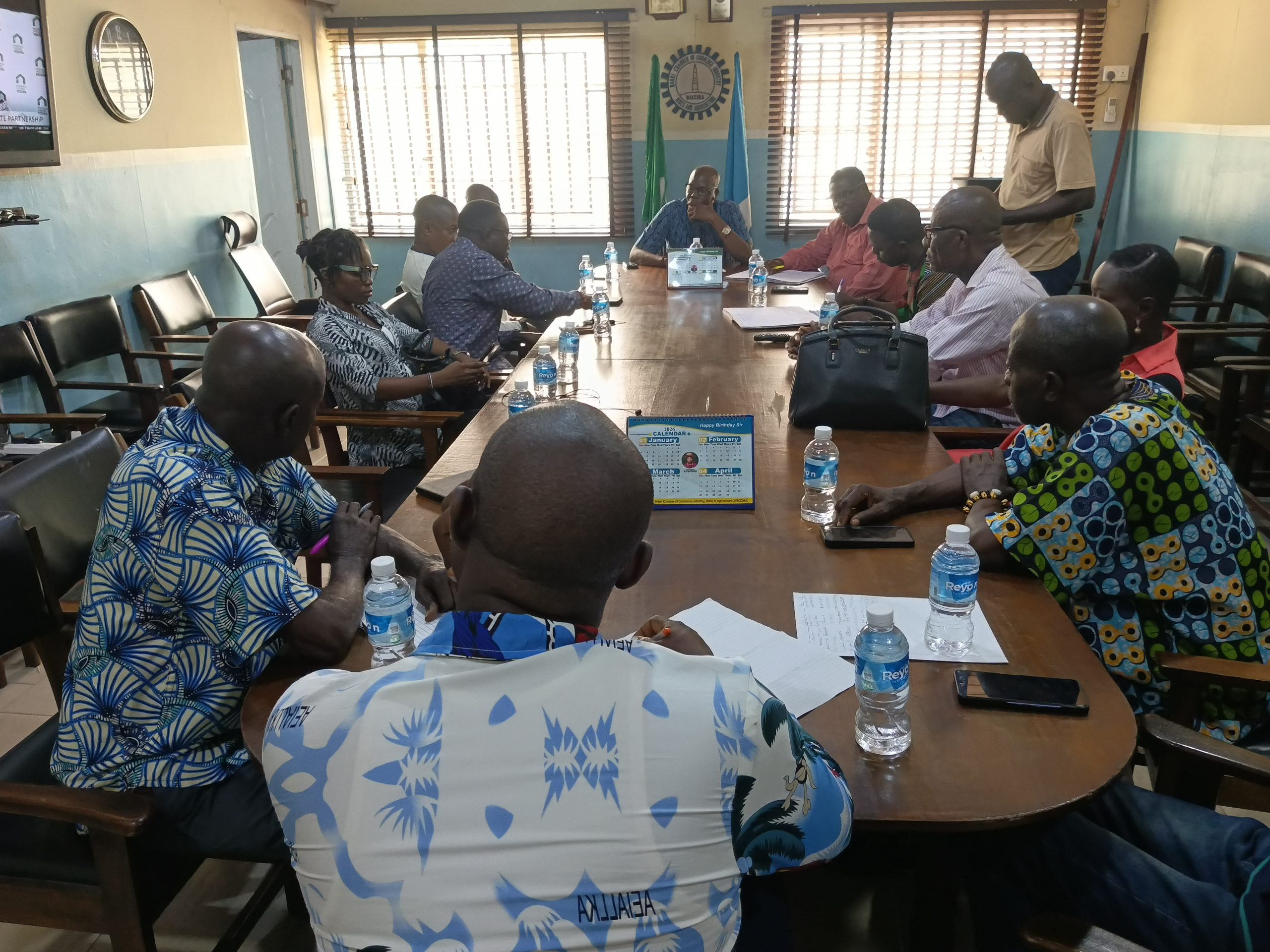
By Peter Onyekachukwu
The Warri Chamber of Commerce, Industry, Mines and Agriculture (WACCIMA) has expressed concern over the steady disappearance of industries and thriving businesses across the Niger Delta, calling for urgent, coordinated action to revive the region’s struggling economy.
The President of WACCIMA, Engr. Anthony Okoh, JP, raised the alarm during a courtesy visit by members of the Nigeria Union of Journalists (NUJ), Warri Correspondents’ Chapel, to the chamber’s secretariat in Effurun, Uvwie Local Government Area of Delta State.
Okoh said that despite being the hub of Nigeria’s oil and gas wealth, the Niger Delta has failed to translate its abundant natural resources into sustainable industries, mass employment and improved living standards for its people.
“The Niger Delta should not be a region where poverty sits side by side with enormous wealth. Unfortunately, many industries that once provided jobs and hope have disappeared, and families are paying the price,” he said.
He noted that the collapse of factories, workshops and trading outfits has left thousands of breadwinners without livelihoods, deepening unemployment and social challenges.
“Warri used to be a place where people came to look for opportunities. Investors were confident, traders were busy and young people could easily find jobs. Today, we are witnessing the reverse, and leaders must admit that our approach has not delivered the desired results,” Okoh added.
The WACCIMA president attributed the situation to poor policy direction, lack of continuity in government programmes and weak collaboration between government and the organised private sector.
He particularly decried the neglect of seaports in the Niger Delta, stressing that functional ports would stimulate industrial clusters, attract investors and create thousands of jobs.
“All the ports in this region are almost abandoned, while everything is pushed to Lagos. This over-concentration increases transportation costs, overworks the roads and makes production more expensive for manufacturers,” he said.
Okoh urged investors and business owners in the region to begin utilising existing ports, explaining that increased patronage would encourage government to invest in their rehabilitation.
He also called for the development of modern rail infrastructure to link ports, industrial zones and major markets, noting that rail transport would ease pressure on highways and improve efficiency in the movement of goods.
Advocating an inward-looking development approach, Okoh urged Niger Delta governors to identify and harness resources within their states to drive industrialisation.
He cited Enugu State as an example, saying the state government has revived moribund industries and is exploring its coal deposits for power generation to support industrial activities.
“Industrial revival is not just about figures. It is about people having jobs, feeding their families, reducing crime and giving young people a sense of purpose,” he said.
Okoh warned against overreliance on political appointees alone in designing economic policies, stressing that chambers of commerce and business associations possess practical knowledge of the operating environment.
“Government must work with the private sector. We run businesses daily. We understand the problems, and we also know what can work,” he added.
Flanked by other chamber executives, including Barrister Bismarck Ighorodje, Mr. Ovie Okome, Mr. Imhansuengbon Patrick and Mrs. Rachael I. Ederughe, Ok