
 By Charles Pemu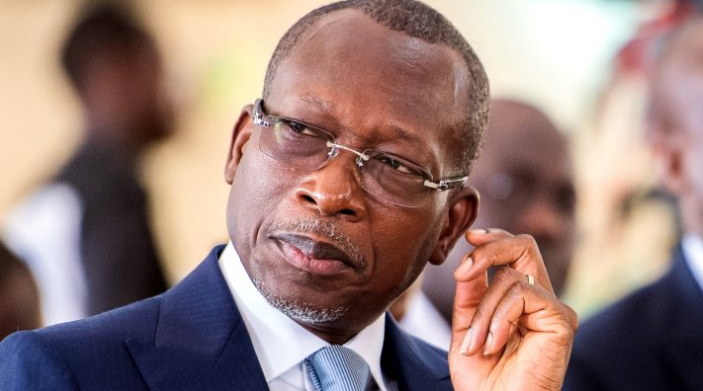
COTONOU, BENIN – The Republic of Benin was plunged into a severe political crisis on Sunday, December 7, 2025, after a group of dissident military officers attempted a coup d’état against the government of President Patrice Talon. While the day began with reports of high volatility and the alleged seizure of state media, authorities later confirmed that the armed forces loyal to the government had successfully thwarted the takeover bid, restoring control over the capital, Cotonou.
The attempted coup unfolded in the early hours of Sunday, marked by reports of troop movements across strategic points in Cotonou and gunfire near the presidential offices. Beninese media outlet TchadOne reported an attack on President Talon’s residence in the Le Guézo neighbourhood, with the operation allegedly spearheaded by Lieutenant Colonel Pascal Tigri.
Dissident Soldiers Seize State TV
The situation escalated when a group of soldiers, identifying themselves as the “Military Committee for Refoundation” (CMR), appeared on national television—which they claimed to have seized—to announce the removal of President Talon from office, the suspension of the Constitution, and the dissolution of all state institutions. Lieutenant Colonel Tigri, reportedly the leader of this faction, appeared on the screen declaring himself the “chairman of the military re-establishment committee.” The putschists also announced the immediate closure of all the country’s land, air, and sea borders.
However, the military’s declaration of power proved short-lived. A few hours after the initial announcement, Benin’s Interior Minister Alassane Seidou issued an official statement confirming that the country’s armed forces and their leadership had foiled the attempted coup. Minister Seidou described the actions of the soldiers as merely a “mutiny” launched by a small group with the aim of destabilizing the country and its institutions, confirming that the loyalist military forces had maintained control of the situation.
Sources close to the presidency assured the public that President Talon is safe and unharmed, condemning the plotters as a limited group controlling only the state television studio. The president’s office emphasized that the regular army was swiftly regaining full order, and that the capital and the country were completely secure. Loyal forces quickly moved to dismantle the coup attempt, with reports indicating that key members of the dissident group, including Lieutenant Colonel Tigri, were arrested.
This sudden crisis in Benin, often cited as a more stable democracy compared to its neighbours, underscores the ongoing fragility of democratic institutions across the West African region. The event adds a new dimension to the troubling pattern of military takeovers—a trend that has severely affected Benin’s neighbours in recent years.
The coup attempt in Cotonou follows the seizure of power in Guinea-Bissau in November 2025, when generals overthrew President Umaro Sissoco Embaló on the eve of an election. It also draws attention to the military regimes still entrenched in Mali, where Colonel Assimi Goïta’s junta recently thwarted an alleged counter-coup attempt; in Burkina Faso, where Captain Ibrahim Traoré’s government has postponed elections amid internal military divisions; and in the Niger Republic, which remains under military rule two years after the ousting of President Mohamed Bazoum. The swift condemnation of the attempted takeover by the Economic Community of West African States (ECOWAS) highlights the regional commitment to constitutional governance despite the recent democratic setbacks.