
 By Peter Onyekachukwu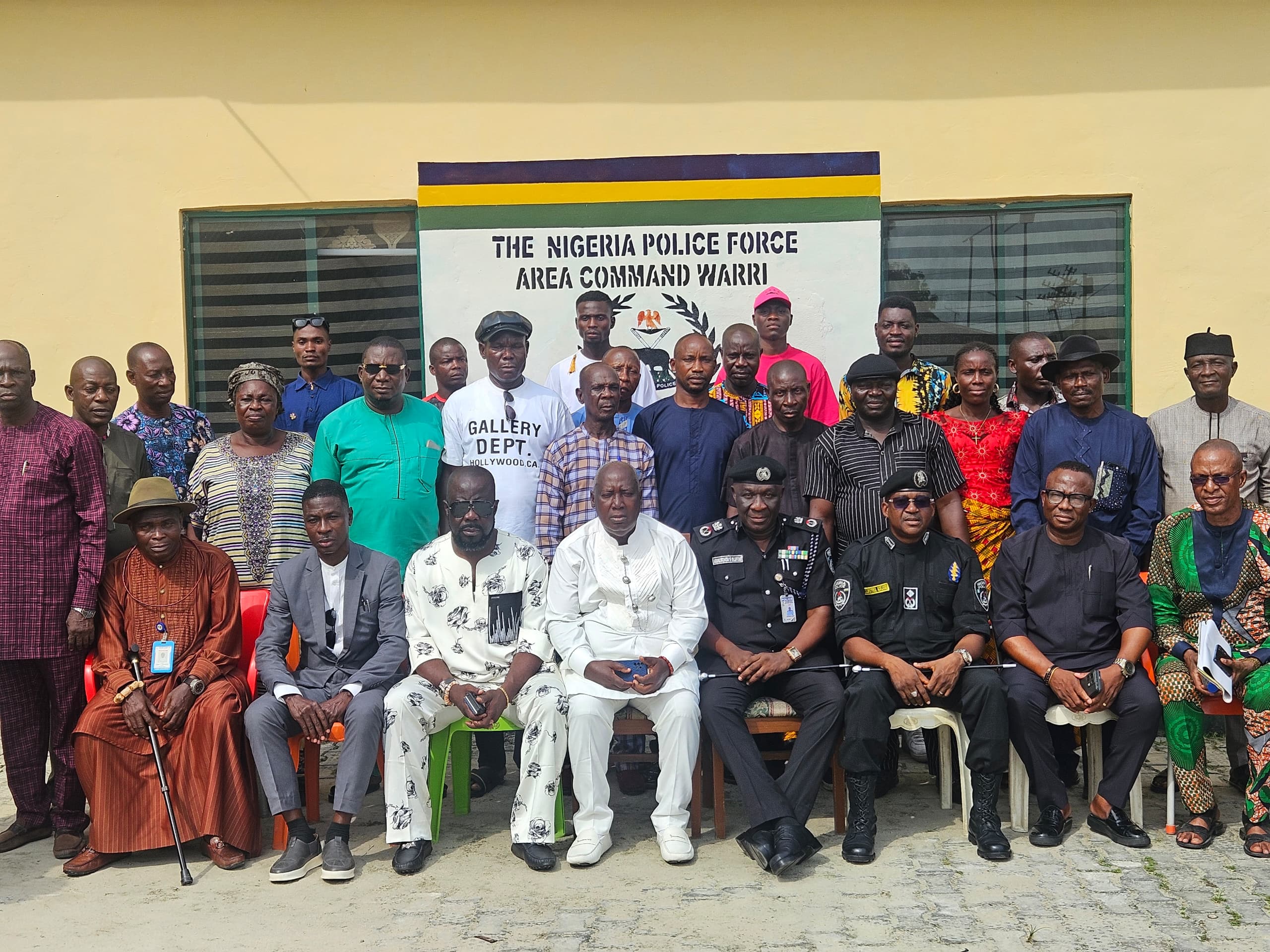
By Peter Onyekachukwu
Tension that had quietly brewed for months among the riverine communities of Okwama, Okoloba, and Akugbene finally found a hopeful path to resolution on Monday, as the Delta State Police Command stepped in with a high-level stakeholders’ peace meeting to prevent what many feared could escalate into a full-blown crisis.
The meeting, held on 1st December 2025 at the Warri Area Command, was convened by the Commissioner of Police, Delta State Command, CP Olufemi Abaniwonda, who said the growing disputes over boundary lines, fishing rights, and other long-standing disagreements had made early intervention not just necessary but urgent. By noon, community leaders, youth representatives, security stakeholders, and traditional authorities had filled the hall, all with a shared concern—protecting their people and preserving the peace.
In his opening remarks, CP Olufemi Abaniwonda stressed that the Command would not stand by and allow avoidable disputes to tear communities apart. He described the meeting as a proactive initiative, one aimed at listening to every voice, mediating fairly, and reinforcing the shared responsibility of peaceful coexistence. He warned sternly that any attempt to breach the peace or resort to self-help measures would draw firm police action.
For many stakeholders in attendance, including the Ag. President General of Okwama community, representatives of Okoloba led by Dr David, and delegates from Akugbene, the police intervention could not have come at a better time. Speakers took turns to express their appreciation, acknowledging that the issues troubling the riverine neighbours were not new but had lingered for years, often resurfacing during fishing seasons when tensions were highest.
Pastor Edewor, Mr Prince—the Youth President of Okoloba—Chief Okoloko Tata of Akugbene, Comrade Cletus, and Aaron Young of Okwama were among those who shared heartfelt submissions. They spoke about the need to rebuild trust, protect livelihoods tied to the waterways, and strengthen communal relations that had been strained by repeated disputes and misunderstandings.
As discussions deepened, the room shifted from grievance-sharing to solution-building. By consensus, the leaders agreed on key resolutions they believed would restore peace. One of the first was a commitment to caution their youths against carrying arms during fishing expeditions—an act that often fuelled fear and suspicion. They also jointly condemned any form of self-help capable of sparking confrontation.
Another major resolution was the unanimous agreement that no community should impose boundaries on waterways. Stakeholders said the rivers belonged to all and that every individual must be free to fish without intimidation or obstruction. To give lasting effect to this understanding, all representatives pledged to support the request letter earlier submitted to the State Government on boundary adjustments and to follow up diligently until appropriate governmental decisions were made.
The meeting also reached practical decisions to improve monitoring and reduce tensions along the waterways. It was resolved that the DCP Operations, DCP Olumuyiwa Adejobi, would invite the chairmen of the affected Local Government Areas for a follow-up session with the CP. This meeting, according to the resolutions, will review strategies for monitoring riverine activities in line with agreements reached during the 2024 Government House Annexe meeting.
To enforce compliance, the stakeholders agreed that any individual or group found violating the peace resolutions or engaging in actions likely to disturb public order would be arrested and handed over to the Area Commander for prosecution. This, participants noted, would serve as a deterrent and help ensure the durability of the peace process.
In a move that underscored their desire for sustained dialogue, the groups also agreed to create a Peace Committee WhatsApp platform. The objective is to improve communication, enhance early-warning systems, and allow Okwama and Okoloba stakeholders to raise concerns before they escalate into conflict.
At the end of the meeting, CP Abaniwonda commended the participants for their maturity, cooperation, and sincere commitment to peace. He assured them that the Police Command would continue to use intelligence-led and community-based policing strategies to prevent violence and protect all residents across the region.
The CP encouraged all communities to uphold the resolutions reached, embrace continuous dialogue, and see peace as a shared responsibility. He reminded them that while disagreements may be inevitable, violence must never be an option when peaceful channels remain open.
The meeting closed with renewed optimism, as leaders from all three communities shook hands, acknowledging that the future of their people and the safety of their waterways depends on the peace they choose to build together.