
 By Charles Pemu
Military officers in Guinea-Bissau formally announced on Wednesday, November 26, that they had assumed “total control” of the nation, effectively confirming a military coup d’état. The command immediately suspended the country’s electoral process and ordered the closure of all national borders, mere days after presidential and legislative elections had taken place.
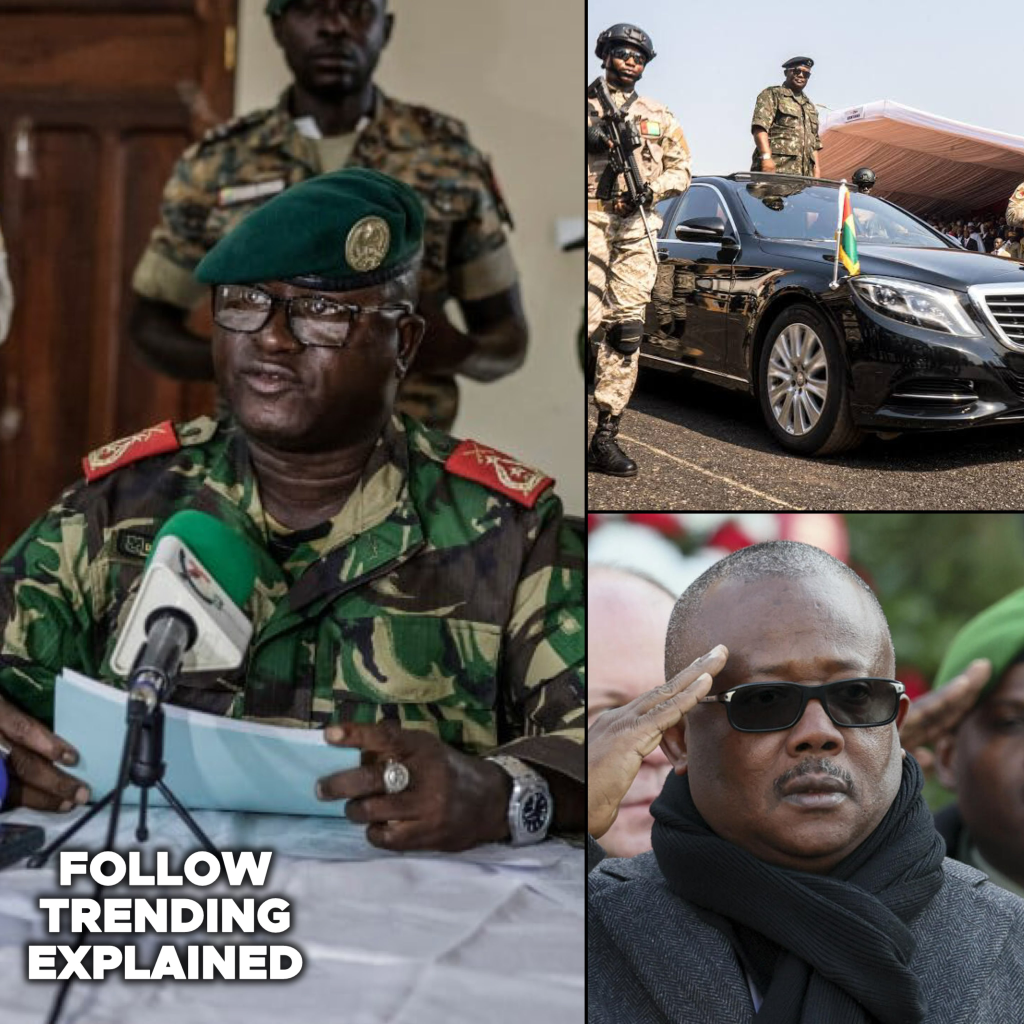
The announcement at army headquarters in the capital, Bissau, followed reports of intense gunfire near the presidential palace earlier in the day, with uniformed military personnel occupying the main thoroughfare leading to the compound.
The country’s outgoing President, Umaro Sissoco Embaló, confirmed his arrest, telling the local publication Jeune Afrique that he was detained around 1:00 p.m. while in his office. Characterizing the incident as a coup d’état led by the army chief of staff, Embaló stated that no force was used against him during the detention.
Several other high-ranking security and political figures were also arrested, including the armed forces’ chief of staff, General Biaguê Na Ntan; the deputy chief of staff, General Mamadou Touré; and the interior minister, Botché Candé.
The coup leaders, operating under the self-styled “High Military Command for the Restoration of National Security and Public Order,” issued a communiqué justifying their action. They claimed the takeover was a necessary reaction to a “destabilisation plot” allegedly “put in place by certain national politicians with the participation of a well-known drug baron.”
The political crisis escalated before official results could be released from the November 23 election. Both the incumbent President Embaló’s camp and that of the opposition candidate, Fernando Dias de Costa, had preemptively claimed victory in the first round, even though the official provisional results were not anticipated until Thursday, November 27.
Journalists monitoring the vote count reported a rapidly deteriorating security situation, noting gunfire at and around the National Electoral Commission (CNE) headquarters, prompting teams to seek cover.