
 By Charles Pemu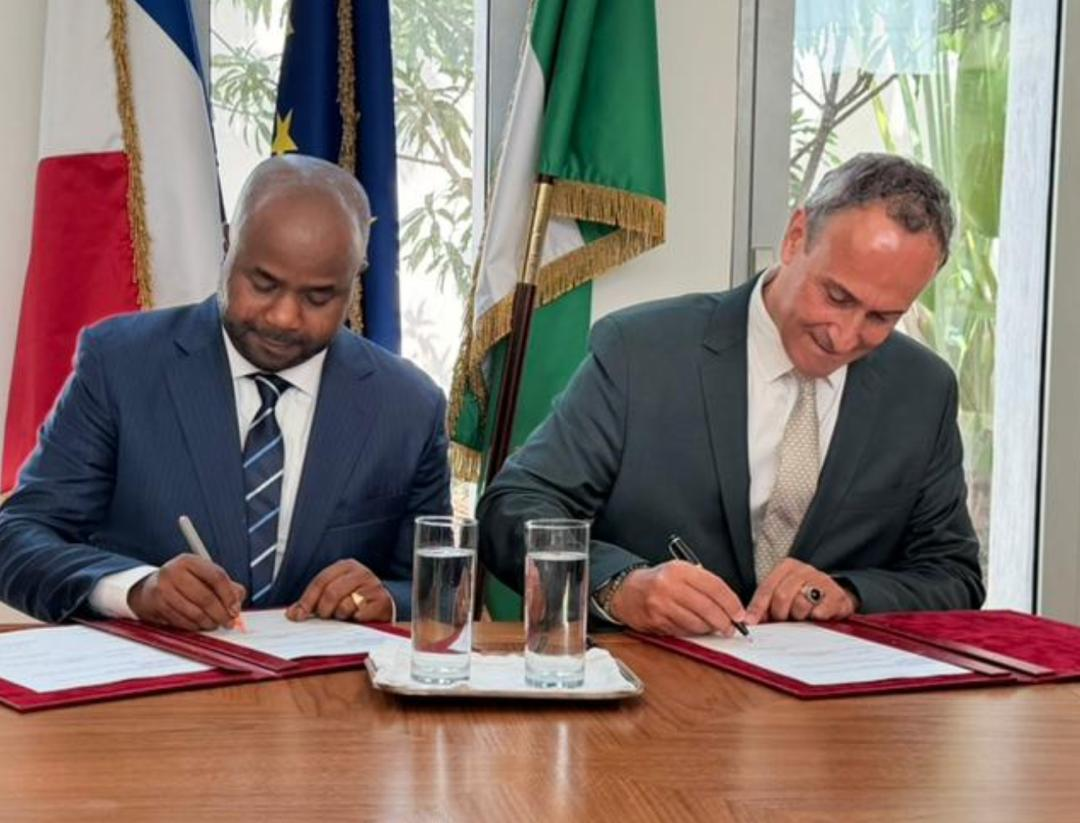
The Federal Inland Revenue Service (FIRS) has secured a landmark cooperation pact with France, designed to fundamentally modernize Nigeria’s tax administration through digital transformation, capacity development, and enhanced cross-border enforcement.
This significant agreement comes just weeks ahead of FIRS’s formal evolution into the Nigerian Revenue Service (NRS) in January 2026, mandated by recent fiscal responsibility reforms.
FIRS Chairman Zacch Adedeji and the French Ambassador to Nigeria, Marc Fonbaustier, signed the Memorandum of Understanding (MoU) at the French Embassy in Abuja. The pact initiates a formal working partnership with France’s tax authority, Direction Générale des Finances Publiques (DGFiP), recognized as one of Europe’s most technologically advanced revenue agencies.
Mr. Adedeji stated that the partnership reflects a shared ambition to build “stronger, more resilient and forward-looking” tax systems as technology, artificial intelligence, and digital commerce reshape global public finance. He listed digital transformation as the central pillar of the pact, noting Nigeria’s intent to leverage France’s experience in automated compliance systems, data-driven audits, and advanced taxpayer service platforms.
The FIRS Chairman emphasized that the exchange is two-way: while Nigeria gains from France’s technological maturity, France benefits from Nigeria’s rapid digital expansion, its youthful population, and the innovative solutions emerging from Africa’s largest market. This collaboration will also focus on adapting to challenges like AI deployment and cybersecurity.
Furthermore, workforce development is a key strategic area. Nigeria aims to adopt France’s structured human capital systems and professional standards, while Nigeria’s experience managing a young, dynamic workforce will offer valuable insights to the DGFiP.
The MoU includes strong bilateral cooperation on key international taxation issues, including exchange of information, transfer pricing, and tackling Base Erosion and Profit Shifting (BEPS). This focus is critical as economic activities become increasingly borderless.
With Nigeria currently struggling with a low tax-to-GDP ratio (averaging 6 to 10 percent, far below the African average of 15 percent), the Federal Government is betting on improved digital systems, unified tax administration, and international cooperation to boost revenue without imposing new taxes. Mr. Adedeji concluded that this partnership will be a foundation for building an innovative and globally connected NRS, capable of keeping pace with global shifts in taxation.