
 By Charles Pemu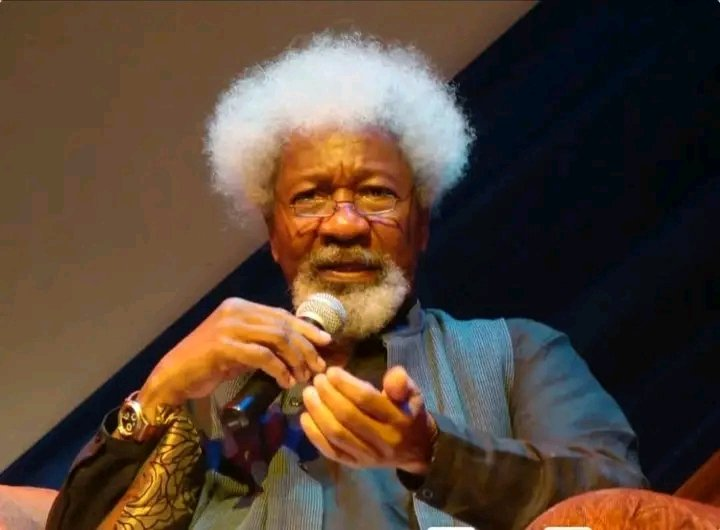
Nobel Laureate Professor Wole Soyinka has issued a strong warning to President Bola Tinubu regarding his administration’s approach to regional security, domestic governance, and the use of state protection for privileged individuals, cautioning against a perceived extravagance in deploying scarce security resources.
Speaking at the 20th Wole Soyinka Centre for Investigative Journalism Awards in Lagos on Tuesday, the respected playwright recounted a recent encounter that left him astonished by what he described as an extravagant display of state security. The remarks were captured in a viral four-minute, 25-second video shared widely on X.

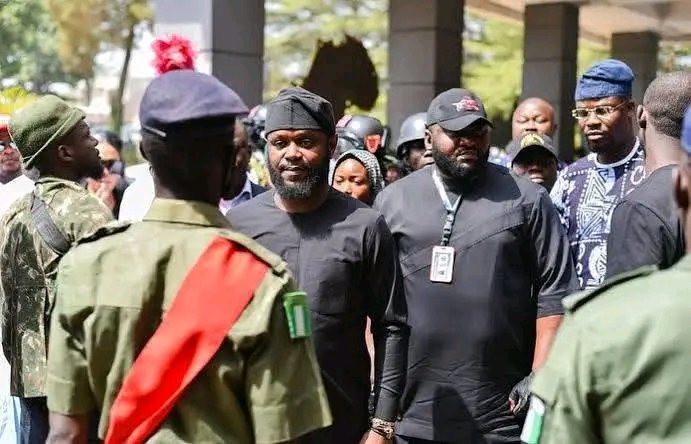
Soyinka described seeing an “excessively large security battalion assigned to a young individual close to the Presidency,” an entourage he wryly stated was “sufficient to take over a small country.”
He later revealed that the young man in question was Seyi Tinubu, the President’s son. The discovery concerned Soyinka enough that he attempted to contact National Security Adviser Nuhu Ribadu.
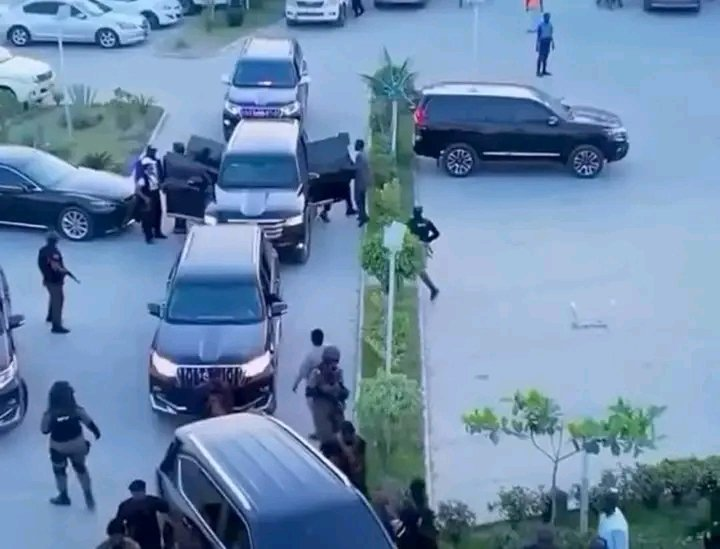
“I couldn’t believe it,” Soyinka said, recounting the call to Ribadu. He described the scene, asking, “do you mean that a child of the head of state goes around with an army for his protection or whatever?”
The Nobel Laureate stressed that such displays were fundamentally wrong: “Children must understand their place. They are not elected leaders, and they must not inherit the architecture of state power simply by proximity.”
Soyinka urged President Tinubu to reconsider the scale of security personnel attached to Seyi, stressing that such resources are urgently needed elsewhere, given that the nation is battling kidnappings, rural attacks, insurgency, and criminal violence. He warned that concentrating a battalion of operatives around one individual is inconsistent with national realities and priorities.
Beyond domestic security protocol, Soyinka addressed two other critical areas: regional stability and domestic reform.
He cautioned against Nigeria’s involvement in the recently halted coup attempt in the Republic of Benin, describing the intervention as “another unnecessary military entanglement next door.” He argued that Nigeria should instead focus on reinforcing democratic institutions at home, noting that instability in neighbouring countries inevitably spills over: “What happens in Benin inevitably affects us.”
Turning to domestic issues, Soyinka criticized the ongoing wave of demolitions across Lagos, stating he had personally received photos and testimonies of displaced families. He stressed that even necessary urban reforms must prioritize human dignity, calling for evacuation procedures that “protect the vulnerable” and ensure humanity is not stripped away from the affected people.
Finally, Soyinka praised Nigerian journalists for their resilience but urged stronger editorial discipline in an era of escalating misinformation. He cautioned that “the next great conflict may well be triggered by the misuse of social platforms,” calling for a renewed commitment to truth and verification, and describing credible journalism as one of Nigeria’s strongest defenses against chaos.
The viral video continues to circulate widely, drawing public discussion on governance and accountability, just months after President Tinubu ordered the withdrawal of police officers attached to Very Important Persons across the country for redeployment to core policing duties.